



How to Measure Bracelet Size? How to Get the Right Measurement?
A bracelet can add a refined gold detail to everyday clothing or complete a polished occasion look. However, even the most elegant design needs a comfortable fit. A bracelet that feels too tight may limit movement, while one that is excessively loose may shift constantly or catch more easily.
This bracelet size guide explains how to measure wrist size at home, how bracelet construction affects sizing and what to review before choosing a gold bracelet online. Since wrists and fit preferences differ, an accurate personal measurement is more useful than relying on a general size assumption.
Why Bracelet Size Matters
Bracelet size affects comfort, appearance and ease of wear. A flexible chain bracelet should move naturally with the wrist without sliding excessively along the arm. A more structured bracelet or bangle requires enough room to be put on comfortably while still sitting attractively once worn.
Accurate sizing is particularly important when shopping online. Unlike earrings or a necklace, a bracelet sits around a moving area of the body and interacts with sleeves, watches, bags and everyday hand movements. Taking a measurement before ordering helps you compare product dimensions with greater confidence.
Fit Is Personal
There is no single ideal bracelet length for every wearer. Wrist circumference, bracelet construction and personal preference all affect the right result. Some people prefer a bracelet that remains close to the wrist, while others enjoy a small amount of visible movement.
The design also matters. A delicate chain bracelet, a flexible tennis-style bracelet, an open cuff and a closed bangle may not be selected using exactly the same approach. Begin by identifying the bracelet type, then take the measurement appropriate for that construction.
How to Measure Your Wrist for a Bracelet
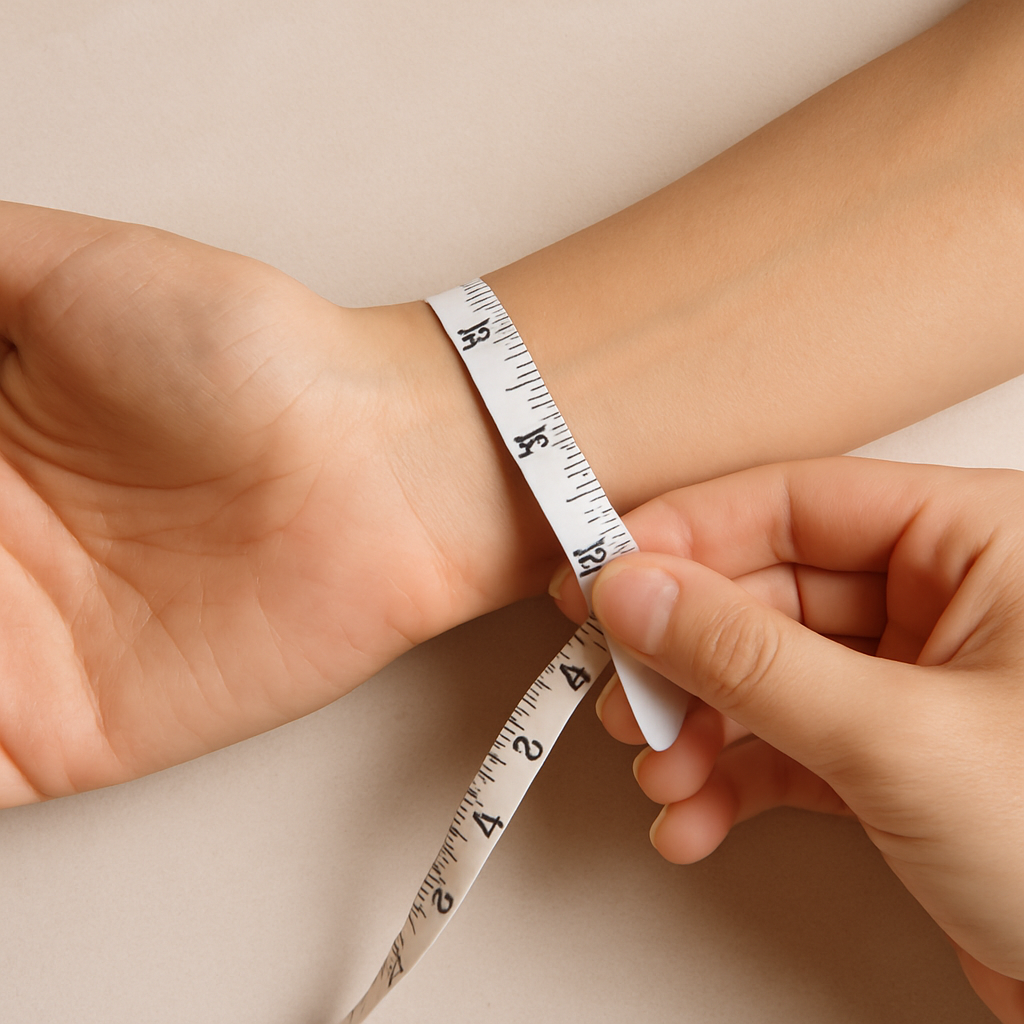
The most direct method for wrist measurement uses a flexible measuring tape. This approach is especially useful for chain bracelets and other flexible designs with a clasp.
Measuring With a Flexible Tape Measure
- Place a flexible measuring tape around the wrist where you expect the bracelet to sit, commonly just below the wrist bone.
- Keep the tape flat against the skin without pulling it tightly or leaving unnecessary space.
- Note the measurement in inches or centimeters.
- Consider whether you want a close, comfortable or more relaxed fit.
- Compare your measurement with the individual bracelet length or sizing information shown for the selected product.
Your wrist circumference is the starting measurement, not always the final bracelet length. A flexible bracelet usually needs some ease so that it can move comfortably when you bend your wrist or carry out ordinary daily activities.
How Much Ease Should You Consider?
The preferred amount of ease depends on your comfort and the design of the bracelet. A close fit may suit a delicate bracelet that you want to keep near the wrist. A slightly more relaxed fit may suit a bracelet intended to move gently or be worn alongside other jewelry.
- Close fit: The bracelet remains near the wrist with limited movement.
- Comfort fit: The bracelet allows natural motion without sliding excessively.
- Relaxed fit: The bracelet has more visible movement and drape around the wrist.
Rather than selecting a larger size automatically, consider the exact product style and the way you want it to feel. A wide bracelet, a charm design or a bracelet worn beside a watch may fit differently from a very fine chain.
How to Measure Bracelet Size Without a Tape Measure
If you do not have a flexible measuring tape, you can still measure your wrist using a strip of paper, ribbon or non-stretch string and a ruler. This simple home method can give you a practical base measurement before shopping.
The String or Paper Method
- Take a thin strip of paper, ribbon or string that does not stretch.
- Wrap it around the wrist at the position where you plan to wear the bracelet.
- Keep it comfortably against the skin without squeezing the wrist.
- Mark the point where the two ends meet.
- Lay the strip flat and measure from the end to the mark with a ruler.
Record the result clearly, including whether you measured in centimeters or inches. When comparing products online, use the same unit shown in the product details or convert carefully before making a decision.
Measure More Than Once
A small measurement error can affect comfort, particularly with a bracelet that offers limited adjustability. Repeat the measurement two or three times and confirm that the results are consistent.
It can also be helpful to measure the wrist at the time of day when you are likely to wear the bracelet. Comfort may feel slightly different depending on temperature, activity and how close you prefer jewelry to sit.
Can You Measure a Bracelet You Already Own?
If you already have a bracelet that fits comfortably, it can provide a useful comparison when choosing a new design. This is especially helpful when the new bracelet has a similar flexible construction and closure style.
Measuring a Flexible Bracelet
- Choose a bracelet that fits the wrist comfortably in the way you prefer.
- Open the clasp and lay the bracelet flat on a smooth surface.
- Measure its wearable length from the fastening point to the corresponding closure point.
- Compare that measurement with the product length of the bracelet you are considering.
Keep in mind that two bracelets of the same stated length can feel different if their links, decorative elements or thicknesses vary. A substantial bracelet may sit more closely than a fine chain with a similar flat measurement.
Do Not Use Diameter for Every Bracelet Type
Measuring the inner diameter is generally more relevant for rigid circular styles such as bangles. A flexible chain bracelet is better compared by its wearable length and by how it fits around your measured wrist.
Before ordering, identify whether the design opens with a clasp, adjusts, remains rigid or needs to slide over the hand. That construction determines which measurement is most useful.
Chain Bracelets, Bangles and Cuffs: Why Sizing Differs
Different bracelet styles sit on the body in different ways. Understanding the design before measuring helps you avoid choosing a size based on the wrong method.
Flexible Chain Bracelets
Chain bracelets open and close around the wrist, so wrist circumference is the main starting measurement. These designs may include delicate links, paperclip-inspired structures, rope details, decorative motifs or other flexible forms.
A chain bracelet should have enough room for normal wrist movement while remaining secure. Pay attention to length, clasp information and whether the product offers adjustable fastening positions.
Tennis-Style Bracelets
A tennis-style bracelet forms a continuous flexible line around the wrist. Fit matters because excessive movement may make the bracelet feel less secure, while a fit that is too close may be uncomfortable during daily motion.
If this luminous style suits your jewelry preferences, compare available gold tennis bracelet designs while reviewing the length and construction details of the individual piece.
Closed Bangles
A closed bangle does not open with a clasp, so it must pass over the widest part of the hand before resting at the wrist. For this type of bracelet, wrist circumference alone may not be sufficient.
To preview bangle fit, bring the fingers and thumb together as though you are slipping on a bangle, then measure around the widest part of the hand. Compare that measurement with the inner dimensions provided for the design.
Open Cuffs and Adjustable Designs
An open cuff or adjustable bracelet may provide more flexibility, but product-specific dimensions still matter. Review how the bracelet is designed to be put on, whether it is intended to adjust and how it should rest on the wrist.
A bracelet should not be repeatedly bent or forced unless the product is specifically designed for that type of adjustment.
How to Choose a Comfortable Bracelet Fit
A comfortable bracelet supports natural movement and fits your styling preferences. Once you have measured your wrist, think about how you intend to wear the design in daily life.
Choose a Closer Fit When:
- You prefer limited movement around the wrist.
- You want a delicate bracelet to remain in a defined position.
- You plan to wear it near a watch and want to reduce unnecessary contact.
Choose a More Relaxed Fit When:
- You enjoy gentle drape and movement.
- You want a bracelet to sit loosely with short sleeves or evening clothing.
- The design and closure allow comfortable additional ease.
Consider Everyday Movement
Before deciding on a bracelet, imagine wearing it while typing, putting on a coat, carrying a handbag or reaching for everyday objects. A bracelet intended for regular use should feel attractive without becoming distracting.
If you intend to stack bracelets, allow for how multiple pieces will sit together. A comfortable stack should not feel tight, and decorative elements should not continually rub against each other during movement.
What to Check When Buying a Gold Bracelet Online
Measurement is essential, but it is only one part of choosing a gold bracelet. A careful product comparison should also include material information, construction and the intended styling use of the piece.
Review 14K Gold Information
Fiyonk Fine Jewelry offers bracelet designs described as 14K gold. According to the Federal Trade Commission guidance on buying gold jewelry, jewelry marked 14K contains 14 parts gold mixed with 10 parts of other metals out of a total of 24 parts.
When selecting a gold bracelet, review the stated karat, gold color and all product-specific material information. These details help distinguish the selected piece from jewelry described using different metal or surface treatment terms.
Review Bracelet Length and Closure
Check whether the product provides a bracelet length, adjustable range or relevant dimensions. For flexible bracelets, look at how the clasp fastens and whether the stated measurement aligns with your desired fit.
For bangles or cuffs, review the inner dimensions or opening information rather than assuming that a standard chain bracelet measurement will apply.
Choose a Style That Fits Your Routine
A fine chain bracelet can add an understated detail for daily wear. A textured link design may be more visible when worn alone, while a stone-detailed or tennis-style bracelet can offer additional brightness for polished outfits and occasions.
After taking your wrist measurement and considering your preferred fit, browse the Fiyonk gold bracelet collection or compare gold tennis bracelets for a continuous line-of-light style.
Bracelet Size Buying Checklist
Use the following checklist before selecting a bracelet online:
- Wrist position: Measure where the bracelet will actually rest.
- Measurement tool: Use a flexible tape measure, string or paper strip accurately.
- Fit preference: Decide whether you prefer a close, comfortable or relaxed fit.
- Bracelet style: Identify whether the piece is a chain bracelet, tennis-style bracelet, cuff or closed bangle.
- Product size: Compare your measurement with the stated length or dimensions.
- Closure: Review clasp or opening information for ease of wear.
- Gold details: Check the stated karat and gold color of the specific bracelet.
- Daily use: Think about movement, sleeves, watches and stacking plans.
- Gift purchase: Confirm sizing before selecting a bracelet for someone else whenever possible.
Accurate measuring takes only a few minutes, but it can make a meaningful difference in how naturally a bracelet fits into your wardrobe and everyday life.
Frequently Asked Questions About Bracelet Size
How do I measure my wrist for a bracelet?
Wrap a flexible measuring tape around the wrist where the bracelet will rest and record the measurement without pulling tightly. If you do not have a tape measure, use non-stretch string or paper and measure the marked length with a ruler.
Should a bracelet fit tightly or loosely?
A bracelet should feel secure without restricting natural wrist movement. Your preferred ease depends on the design and whether you want a closer fit or gentle movement.
Do chain bracelets and bangles require the same measurement?
No. Flexible chain bracelets are generally chosen using wrist circumference, while a closed bangle must fit over the widest part of the hand before it reaches the wrist.
Can I use a bracelet I already own to determine size?
Yes. A comfortable bracelet of a similar style can help you compare wearable length, although different thicknesses and constructions can still affect fit.
What should I review before buying a gold bracelet?
Check the bracelet measurements, clasp or opening type, stated gold karat, gold color and product-specific design information before making your selection.
Explore 14K Gold Bracelets From Fiyonk Fine Jewelry
A comfortable bracelet begins with an accurate wrist measurement and a design selected for the way you plan to wear it. Explore Fiyonk Fine Jewelry bracelet styles after identifying your preferred fit, gold detail and bracelet construction.
This content is written and approved by Fiyonk Jewelry Ltd., a company with more than 20 years of experience in the gold jewelry industry. Fiyonk Fine Jewelry also operates two physical stores located in Istanbul, Turkey. You can view our store location on Google Maps here: Fiyonk Jewelry Google Maps Location.

Written by Muge Ekmekcioglu Seker

Leave a comment
This site is protected by hCaptcha and the hCaptcha Privacy Policy and Terms of Service apply.